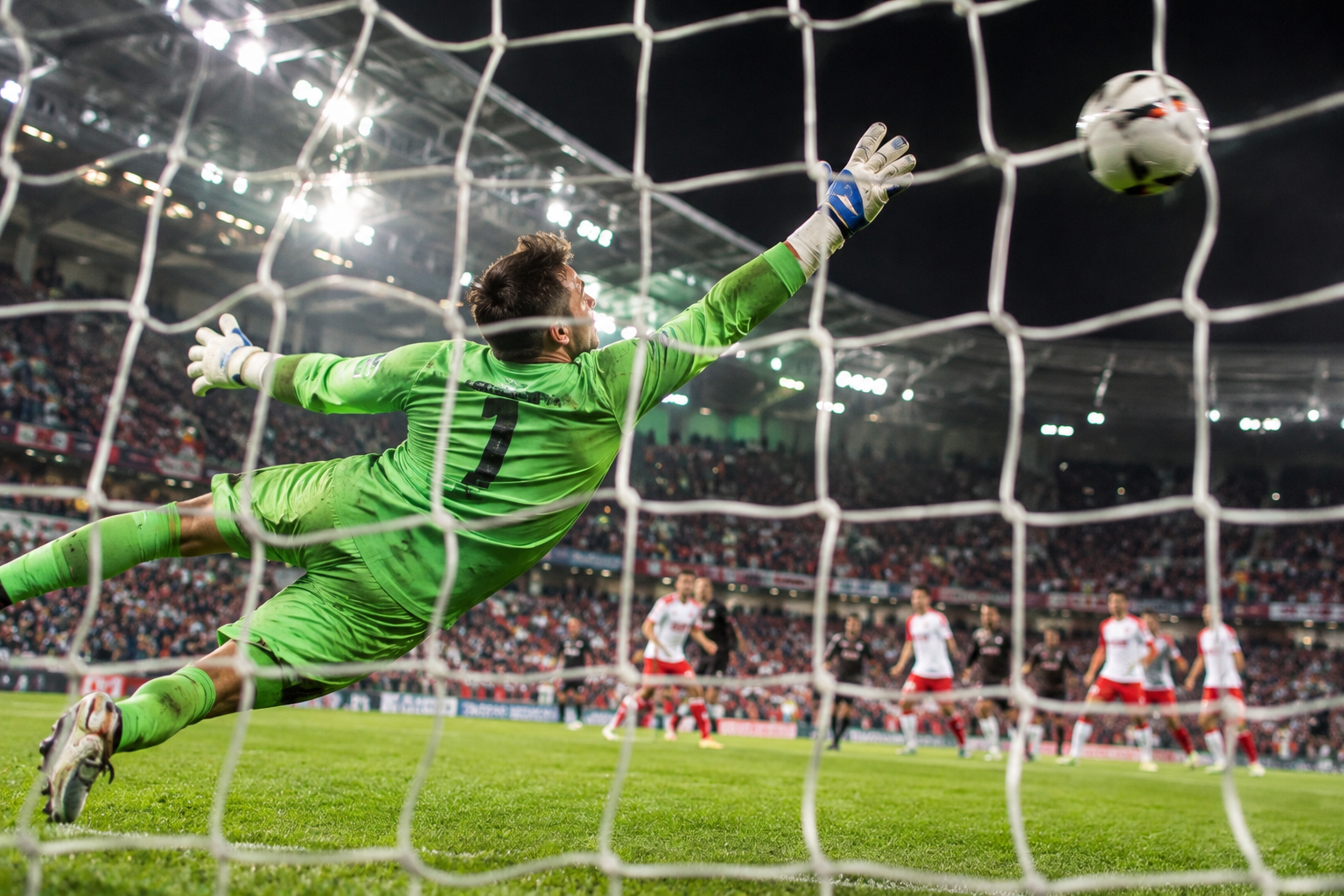
Few moments in sport produce an emotional reaction as immediate as a perfectly executed football goal. A long-range strike that leaves the goalkeeper with no chance, a delicate finish after an intricate passing move or a dramatic header in the closing seconds can transform the atmosphere of an entire stadium. For supporters who want to revisit these defining moments, football goals and highlights offer a way to experience the excitement again while discovering the skill, timing and teamwork behind each memorable action.
A goal may occupy only a few seconds of a match, but its creation often begins much earlier. The movement of a forward, the positioning of a midfielder and the decision to release a pass at precisely the right moment can all contribute to the final finish. Looking beyond the ball crossing the line reveals why football’s most impressive moments are rarely as simple as they first appear.
A Great Finish Begins Before the Shot
The natural instinct when watching a goal is to focus on the player who scores. Their technique, composure and ability to choose the right finish often determine how the moment will be remembered. Yet the most effective attacking moves usually involve several players making coordinated decisions.
A winger may attract two defenders before releasing the ball into an open channel. A midfielder might recognise a gap and deliver a pass before the opposition can reorganise. The striker’s movement then creates the final opportunity, allowing the attack to reach its conclusion.
This sequence is part of what makes football such an interesting team sport. Individual ability matters, but it becomes even more effective when combined with awareness of teammates and an understanding of space. A technically gifted forward can struggle when isolated, while a well-organised attacking unit can create opportunities through movement and timing even without relying on one exceptional player.
Rewatching the build-up helps viewers appreciate these contributions. It also reveals how different attacking philosophies produce different types of goals. Some teams prefer quick combinations through the centre, others use overlapping full-backs to stretch defensive lines, while some rely on direct passes that allow forwards to attack space behind the opposition.
The finish may receive the applause, but the preparation gives it meaning.
The Many Forms of Individual Brilliance
Football goals are memorable partly because they rarely look identical. The sport allows players to express technical ability in numerous ways, and the most spectacular finishes often demonstrate qualities that are difficult to reproduce.
A powerful shot from outside the penalty area requires balance, accuracy and confidence. A curling effort demands precise contact and an understanding of the ball’s trajectory. A delicate chip over an advancing goalkeeper depends on timing and composure, particularly when the player has very little time to assess the situation.
Headers involve another set of skills. The scorer must judge the flight of the ball, anticipate the defender’s movement and position their body correctly. A well-timed run can be just as important as the contact itself, especially when the cross arrives into a crowded penalty area.
There are also goals that stand out because of improvisation. A player may adjust their body in mid-air, use an unexpected touch or react instinctively to a loose ball. These moments demonstrate the importance of technical preparation combined with the ability to make decisions under pressure.
Different types of goals appeal to different supporters. Some admire the precision of a carefully constructed team move, while others are drawn to individual dribbling or extraordinary shooting technique. The variety ensures that memorable goals remain a central part of football’s visual identity.
When the Entire Team Creates the Moment
Not every outstanding goal is the result of one player’s exceptional skill. Some of the most satisfying finishes emerge from coordinated attacking movements in which every pass has a clear purpose.
A team may move the ball from one side of the pitch to the other, forcing the opposition to shift its defensive shape. A quick exchange near the penalty area can then create a narrow opening for a final pass. The scorer needs only one touch, but the opportunity exists because several teammates have understood the same attacking idea.
These sequences are particularly rewarding to watch again because they reveal the intelligence behind the execution. The movement away from the ball can be as important as the pass itself. A forward who makes a run towards the near post may draw a defender out of position, allowing another attacker to arrive unmarked at the far side.
The speed of the combination also matters. Some teams rely on one-touch passing to prevent defenders from recovering their positions. Others slow the attack down, inviting pressure before exploiting a gap that appears when an opponent steps forward.
A well-edited match recap can preserve enough of this sequence to show how the goal developed. Without the build-up, viewers may see only the final touch. With it, they can appreciate the collective understanding that made the finish possible.
Goalkeepers and Defenders Are Part of the Story
Although goals naturally attract attention, football’s most memorable video moments are not limited to successful attacks. A remarkable save or a last-second defensive intervention can carry the same emotional intensity as a goal.
Goalkeepers must make decisions in extremely short periods. They read the striker’s body position, estimate the direction of the shot and choose whether to move early or wait for the ball to leave the player’s foot. A spectacular save may involve reflexes, but positioning and anticipation often determine whether the goalkeeper is able to reach the ball at all.
Defenders face different challenges. A perfectly timed sliding tackle, an interception near the penalty area or a clearance under intense pressure can prevent a match from taking a completely different direction. These actions rarely receive the same attention as a goal, yet they can be decisive.
Including defensive moments in a football recap creates a more balanced picture of the contest. It reminds viewers that every attacking opportunity is opposed by players trying to read, interrupt and neutralise the threat.
For neutral fans, these moments can be just as entertaining as attacking combinations. They demonstrate another side of footballing excellence: the ability to remain composed when the consequences of a mistake could be immediate.
Why Some Goals Become Part of Football History
The technical quality of a goal is only one reason it becomes memorable. Its importance within the match, the competition and the wider story of a club can give it a significance that goes far beyond the finish itself.
A late winner in a major final carries a different emotional weight from a similar strike in an ordinary league fixture. A goal that completes an unexpected comeback can become a symbol of resilience. A decisive international tournament moment may remain associated with an entire generation of supporters.
Context changes the way viewers remember the action. The score before the goal, the time remaining and the consequences of the result all contribute to its significance. A technically ordinary finish can become legendary because it arrives at the perfect moment, while a spectacular strike in a comfortable victory may be remembered primarily for its beauty.
This relationship between action and context is one reason supporters repeatedly return to classic football footage. They are not simply examining technique. They are revisiting the emotion surrounding an event and recalling why it mattered.
The Appeal of Watching Goals More Than Once
A memorable goal often becomes more interesting with each viewing. The first time, supporters may react to the finish itself. On a second viewing, they may notice the run that created the space or the goalkeeper’s positioning. A third look can reveal how the attacking team manipulated the defensive line.
This repeated viewing has become an established part of digital football culture. A 2026 study published in European Sport Management Quarterly, examining 2,268 football highlight videos, found that factors such as video length, engagement and match events were associated with viewing demand. Its findings underline that audiences are interested not only in the existence of a goal, but also in the qualities and circumstances that make a match compelling.
The ability to revisit individual moments also changes how supporters discuss football. Instead of relying entirely on memory, they can examine the movement, technique and decision-making involved. A debate about whether a striker should have passed or taken the shot becomes more informed when viewers can return to the sequence.
For younger players, repeated viewing can have an educational dimension as well. Observing how experienced footballers position their bodies, control the ball and react under pressure can offer useful examples of technique. Video cannot replace training, but it can help make certain decisions easier to understand.
From Stadium Memory to Digital Football Culture
A goal witnessed in a stadium often remains a personal memory. Supporters remember the noise, the movement in the stands and the reaction of people around them. Video allows that experience to travel beyond the stadium and become part of a shared football conversation.
Fans who watched the same match from different places can revisit the moment together. Those who missed the fixture can still understand why it became important. Supporters from younger generations can discover historic goals that shaped their clubs’ identities, even if they were not alive when the original matches took place.
This accessibility has made football footage an important part of the sport’s cultural memory. Goals are no longer confined to the match in which they happened. They can be compared across eras, discussed through different tactical perspectives and appreciated for the qualities that make them distinctive.
However, a short clip should not always be treated as a complete account of the incident. When a goal involves a disputed decision, a possible foul or an unusual sequence, additional context may be necessary. Official competition and club coverage can help viewers understand the circumstances more accurately.
The Moments That Keep Football Captivating
The best football goals combine technique, imagination and timing. Some are the product of carefully rehearsed movement, others emerge from instinctive reactions or individual creativity. Their appeal comes from the fact that no two moments are exactly alike.
Video recaps preserve these actions, but their greatest value lies in helping supporters understand what made them special. A finish becomes more impressive when viewers recognise the movement that created the opportunity. A save becomes more meaningful when they understand the danger the goalkeeper faced. A team goal becomes a demonstration of collective intelligence when every pass and run is considered together.
Football will continue to produce new examples of skill and invention, from unexpected strikes in domestic competitions to decisive finishes on the biggest international stages. Some will be remembered for their beauty, others for their importance, and a few will become part of the sport’s lasting history.
The final touch may last only an instant, but the story behind it can be worth watching many times. That is the enduring appeal of football goals: they capture the creativity of the game in its most visible form while reminding supporters that the finest moments are often created long before the ball reaches the net.